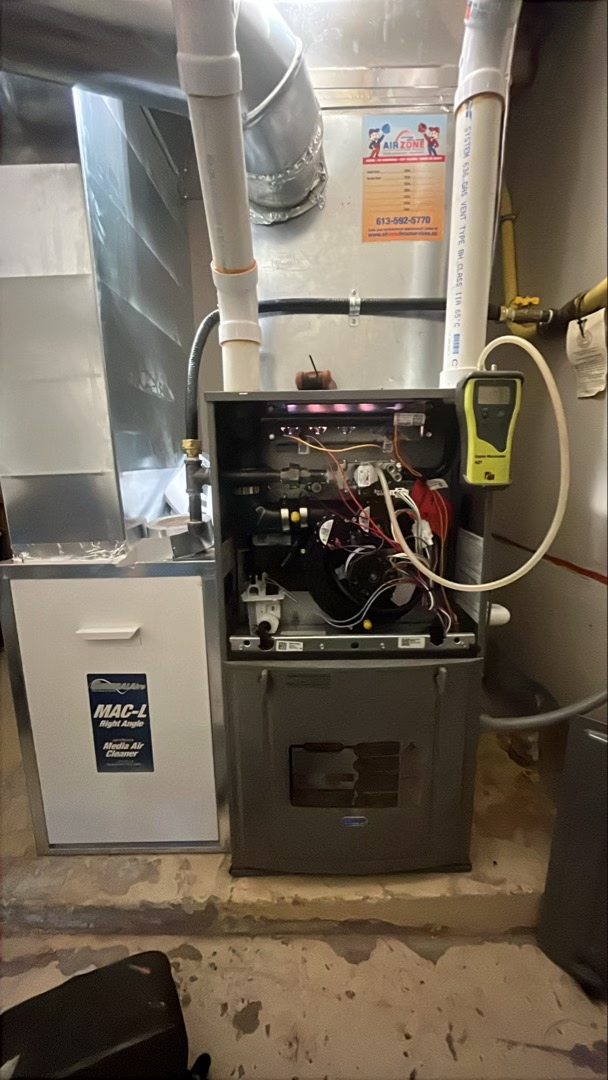
If your Ottawa home already uses an electric furnace, a replacement discussion should cover more than the size of the new cabinet. You may be comparing a new resistance-heating system with a ducted heat pump and compatible indoor equipment. Before choosing, ask what will heat your home on the coldest days, what can stay, and what the complete installation requires.
This guide focuses on comparing heat-pump options for a home with existing electric forced-air heating. AirZone’s heat-pump installation team can assess supported equipment and the work your home would require.
First, identify what you have
“Electric furnace” and “air handler” are sometimes used loosely in conversations and old paperwork. An electric furnace produces heat with resistance elements and moves air through ducts. An air handler circulates air and can contain the indoor coil for a heat pump; some configurations also include electric supplemental heaters.
Write down the model number from an accessible label or previous invoice. If you already have an outdoor unit, include its model too. Do not remove equipment covers to collect this information. Ask the advisor to explain the actual components in your system before comparing replacements.
Compare two complete project scopes
A resistance-heating replacement and a heat-pump project may involve different indoor equipment, controls and electrical work. The comparison is easier when both proposals answer the same questions:
- What equipment is being removed, retained and installed?
- What assessment supports the proposed heating capacity?
- What work is needed at the supply and return ducts?
- How will the system provide cooling, if that is part of your goal?
- What will provide supplemental heat, and how will the controls operate it?
- Which electrical work and finishing work are included or excluded?
Natural Resources Canada explains that heat pumps transfer heat and that a ducted retrofit needs an assessment of existing airflow and distribution. Supplemental heating depends on the selected equipment and the home’s requirements. A manufacturer’s low-temperature operating limit alone does not establish whether a system can meet your whole home’s heating demand at that temperature.
Have the electrical scope assessed before choosing equipment
A home that already has electric heat still needs an electrical review for the proposed configuration. The outdoor heat pump and supplemental heaters may operate together under some conditions. The Electrical Safety Authority’s heat-pump guidance highlights the importance of accounting for those combined loads.
Ask who will assess the existing service and circuits, who will carry out any electrical work, and how that work appears in the quote. Do not assume that an empty breaker position proves sufficient capacity or that every home needs a service upgrade. Do not open the electrical panel or attempt wiring changes yourself.
Use your own heating history to compare costs
Bring recent electricity bills and note any major changes in occupancy, thermostat habits, insulation or windows. Ask for the assumptions behind any operating-cost estimate, including the electricity rate, heating demand and expected use of supplemental heat.
A useful comparison separates the installed price from estimated operating costs and possible incentives. If two estimates use different assumptions, ask for a like-for-like version. A general efficiency claim cannot tell you the exact savings for your home.
For project budgeting, read our Ottawa heat-pump installation cost guide. Check the current rebate guidance before making commitments; eligibility and application steps must be confirmed for the proposed project.
Bring these four things to the consultation
- Existing equipment model numbers and available service records.
- A short list of rooms that are uncomfortable and when the problem occurs.
- Your heating bills and planned home or electrical upgrades.
- Your priorities: upfront budget, cooling, comfort, operating costs or reducing resistance-heat use.
Ask the advisor to leave you with a clear equipment list, installation scope and explanation of the supplemental-heating plan. If you want to explore a supported heat-pump system for your existing electrically heated home, request an AirZone consultation. Confirm the available equipment and the work your home needs before choosing a replacement.