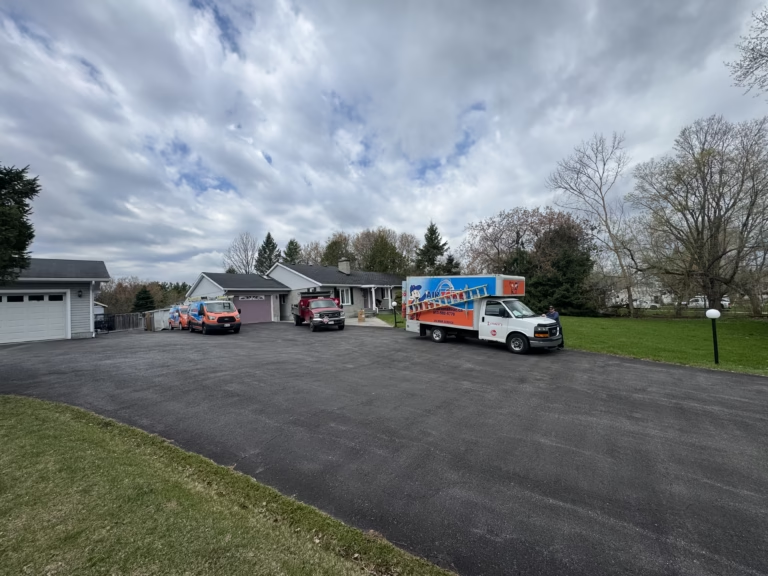
An HVAC installation price covers more than the equipment and the hours a crew spends in your home. It includes assessing the house, selecting a suitable system, the materials and site-specific work needed to install it, testing and the company support behind it. At AirZone, we quote a fixed price for that complete installation, so subtracting an online equipment price does not reveal a separate labour charge.
You have a quote for a new furnace, air conditioner or heat pump. Then you search for the equipment online, or ask AI what it should cost, and find a much lower number. Subtract that number from the quote, allow a day for installation, and the difference can seem hard to justify.
I understand why the next question is: “Can you break out the equipment, materials and labour?” You are trying to understand a substantial purchase and make sure the price is reasonable.
Our proposals describe the work covered by that fixed price, rather than listing equipment, materials and labour as separate charges. I would like to explain what sits behind the total, particularly the expertise, customer care and continuing support that are easy to overlook in a product listing.
First check what the online price includes
An online equipment price can be accurate and still describe only part of the system in your quote.
For example, a heat pump listing might cover the outdoor unit without the matched indoor coil, controls or other components needed for your installation. Delivery and taxes may be treated differently, too. Even when the model matches, the package may not.
AI can help find equipment and organize the information. It can also produce an estimate that looks complete without establishing whether the equipment combination or installation assumptions match your home. Check the source, date, location, currency and exact components behind the number.
If you have found a listing or received an AI estimate, bring it to us. We can look at whether it describes the same equipment and identify the work it allows for. That gives us a useful starting point for explaining the difference.
Your house determines the work around the equipment
A furnace or heat pump does not arrive ready to operate independently of your home. It has to work with the ducts, controls, electrical supply and other equipment, and it has to be installed in a suitable location.
Depending on the project, the work can include:
- Duct transitions or modifications to connect the equipment and accommodate the required airflow.
- Electrical connections or additional electrical work identified during the assessment.
- Refrigerant lines, insulation and routing for an air conditioner or heat pump.
- Venting, gas connections or condensate drainage, where applicable.
- Supports and placement for outdoor equipment, considering snow, access and servicing.
- Compatible controls and, for a heat pump, the way backup heating will operate.
- Removal of the old equipment, start-up, testing and adjustments.
Not every installation needs every item. These are examples of why the same equipment can involve different work in two houses. Required work identified during the assessment should be included or clearly addressed in the proposal, rather than left for you to assume.
When we talk about “extras,” there is also an important distinction. Some are optional choices, such as a different control or an equipment upgrade. Others are necessary work for a particular installation. Your quote should help you tell the difference, identify exclusions and explain how a change would be priced and approved.
An equipment listing cannot establish those site requirements. Neither can a generic allowance for a few hours of fitting time.
The expertise starts with the first visit
Before installation day, someone has to answer your enquiry, arrange a visit and understand what you need from the system. That includes hearing about the rooms that do not stay comfortable, the equipment you intend to keep and the budget you are working within.
The assessment helps determine a suitable capacity and equipment combination. It also helps identify installation requirements before the work starts. If you ask why a size was selected, how a heat pump will work with your furnace or which AHRI reference applies to a rated equipment combination, you deserve an informed answer.
Our team includes an HRAI-certified system designer. We consider heating and cooling requirements, airflow, ductwork and equipment compatibility when making recommendations. That is expertise behind the proposal, rather than simply supplying the model you found online.
We also work with multiple brands, including Rheem, Lennox, Mitsubishi Electric, Amana, Moovair and Midea. That gives us options to discuss for different homes and budgets. The value is in helping you understand which features and equipment combinations suit your needs, not assuming the most expensive model is the right one.
There is practical coordination as well. Equipment and materials have to be ordered, the work scheduled and the crew prepared. Questions and changes need to reach the right people. A smooth installation depends on that preparation, even though it does not appear in the photograph of the finished system.
If you are considering financing, there is another conversation about the available options and terms. We can discuss available financing options, which are subject to credit approval. The monthly payment should be considered alongside the total cost and financing terms. Offering a way to discuss those options is part of the buying process; it does not make an unsuitable system or an unaffordable commitment the right choice.
Installation time includes more than the hours you see
Consider two installers spending eight hours in your home. That is sixteen person-hours of skilled work, before counting the assessment, design, ordering, loading, travel or follow-up.
The job also needs materials, vehicles, tools and test instruments. At the end, there is time to start the system, check operation, make appropriate adjustments and explain the controls to you. Those steps matter just as much as the hours spent connecting the equipment.
If you subtract an advertised equipment price from the quote and divide everything left by eight, you put all of those costs into a single supposed hourly rate. That calculation tells you very little about what an installer earns or what the company makes on the job.
This does not mean you should accept any installation price without question. It means the useful explanation is the work, resources and responsibility included in the project, rather than treating the remainder as wages for one person’s day.
The company still needs to be there after installation
This is the part of the price I most want homeowners to consider.
AirZone has been a locally owned, family-run Ottawa business since 2005. Our installation and service technicians are directly employed, and we do not subcontract your installation. Our office staff, comfort advisors and technicians work together, keeping responsibility with the local company you chose.
You may have a question about the controls after using the system for a few days. You may need help understanding its operation during colder weather. Further down the road, you may need maintenance, a repair or assistance with a warranty issue.
At that point, the equipment’s online price is not much help. You want to know who to call, whether they have your installation information and how to get the right technical help involved.
Keeping that support available takes people and resources. The office team, installation records, trained technicians, vehicles and tools all remain necessary after the original job is finished. A company has to allow for those responsibilities when it prices its work.
Manufacturer parts coverage and the contractor’s labour coverage also need to be understood separately. Ask what each covers, which conditions or exclusions apply and who you should contact if something goes wrong. The presence of a manufacturer’s warranty does not, by itself, explain how diagnosis, labour or other service costs will be handled.
Future support does not mean every visit or repair is free. The written warranty and service terms should make that clear. My point is that the ability to answer, understand the installation and help with the next step has a cost, and it matters when you choose who installs your system.
If you are comparing an equipment purchase with a complete installation, ask who will take responsibility for each stage, including after the system is running. Those are different arrangements, and the price comparison needs to recognize that.
Why business costs are part of the installed price
Some costs belong directly to your installation. Others support every customer we serve. In our business, those shared costs include WSIB, insurance, shop rent, office staff, vehicles and maintenance, fuel, tools, training and marketing.
I want the technicians working in your home to earn a living wage and have benefits. I want our office staff to be able to build a life on what we pay them, too. These are people we rely on to make good decisions, help customers and work with equipment involving gas, electricity and combustion. Experience is worth retaining.
A business also has to account for how much work its crews can realistically complete. Holidays, illness, training and time spent resolving a concern on an earlier installation all have to be paid for. Every paid hour is not available to sell on a new job.
Those costs help explain the project price. They are not a reason to avoid explaining it, and they do not make a higher quote automatically better value. The question remains whether the equipment, work and support in the proposal make sense for your home.
What we can clarify without a separate equipment and labour charge
A fixed installation price should still come with a clear description of what you are buying. You should be able to understand:
- The equipment models, matched components, controls and accessories included.
- The installation work covered, including connections, removal, start-up and any applicable permits or inspections included or excluded.
- Known exclusions, optional upgrades and the process for approving changes.
- Manufacturer parts coverage, contractor labour coverage and the route for future service.
- The installed price, tax treatment and payment terms, with estimated rebates shown separately from the amount before incentives.
We do not generally provide supplier invoices or payroll figures. We can explain a particular item, discuss the installation requirements and show what an optional upgrade adds to the price.
For example, you might want to know the difference between a central air conditioner and a heat pump, what a higher-efficiency model adds, or whether a compatible existing thermostat can be retained. Those are useful breakdowns because they help you make a choice.
If an AI estimate assumes a simpler installation, ask us to explain which assumptions differ. If another contractor has quoted less, ask about the equipment, scope and coverage in each proposal. Sometimes there is an important difference. Sometimes another good company has offered a better price for comparable work, and you are entitled to choose it.
Bring us the number that does not make sense
You do not owe us an apology for researching the equipment or asking about price. I would rather have the conversation than leave you wondering why the quote and an online estimate are so far apart.
Bring us the listing, the AI estimate or the item you want explained. We can discuss what your home needs, what the proposal includes and what different choices would change.
For an existing AirZone quote, contact the person who prepared it with your questions. If you are starting a replacement project, request a free, no-obligation installation quote. Repair and diagnostic visits are separate services with a diagnostic charge; our HVAC services page explains those options.
We owe you a clear quote, an honest explanation and the work we agreed to do for the price we agreed to charge. That includes helping you understand the expertise and company support behind the equipment.