After a basement flood affected a Nepean home, our team helped with the furnace replacement. Along with choosing a new model, we looked at how to give the furnace more clearance from the basement floor.
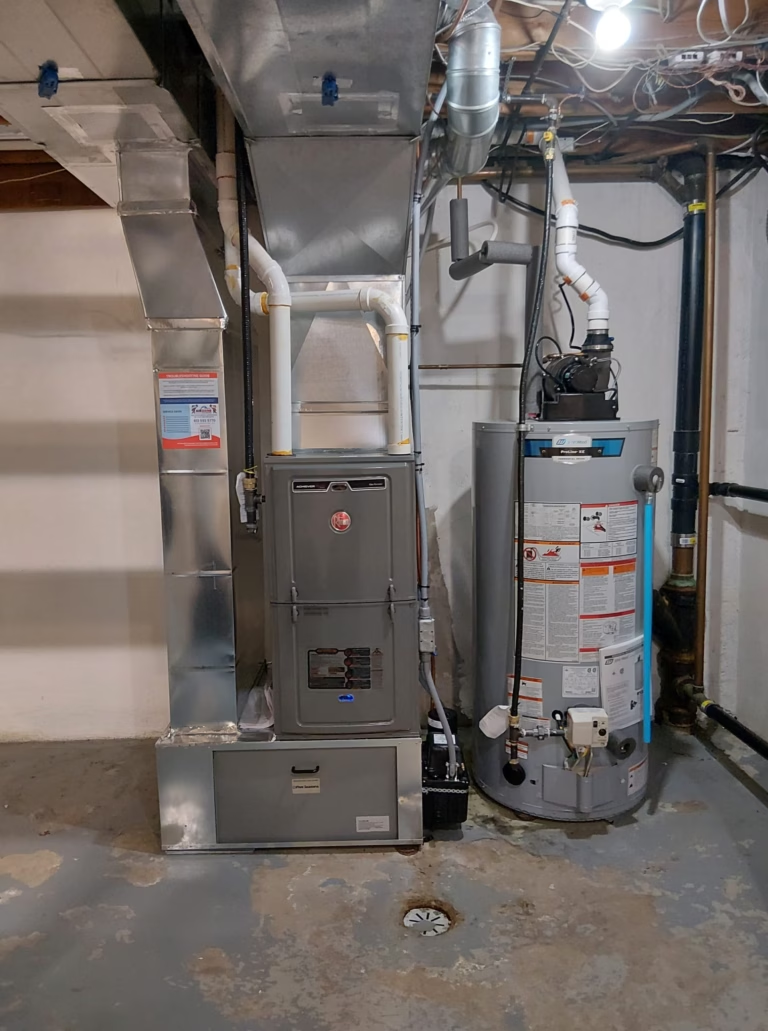
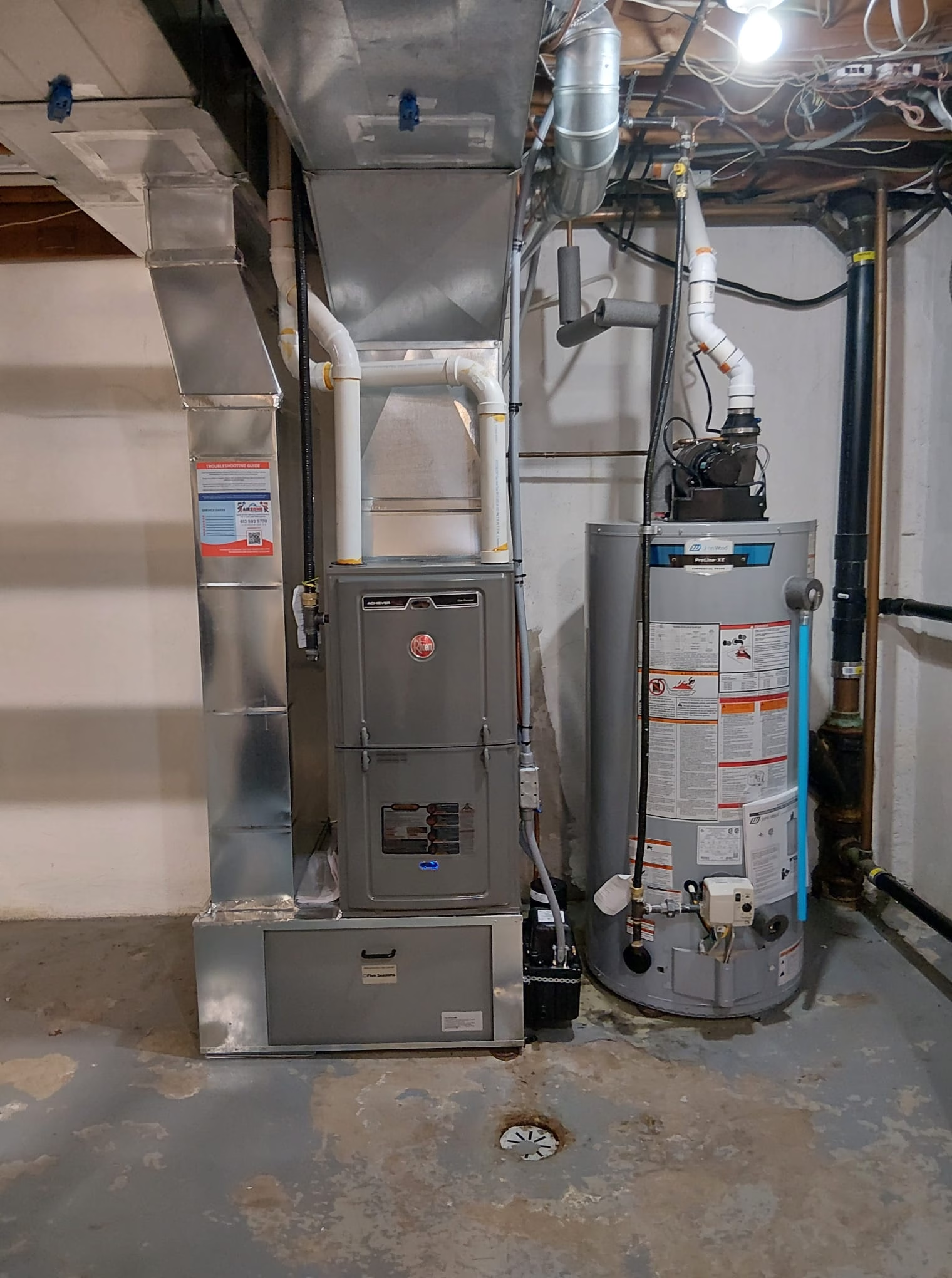
The furnace and water heater had both been affected by flooding. For the furnace replacement, we installed a Rheem R962V on a raised filter platform. The platform lifts the cabinet away from the floor and provides a filtered return-air path into the bottom of the furnace.
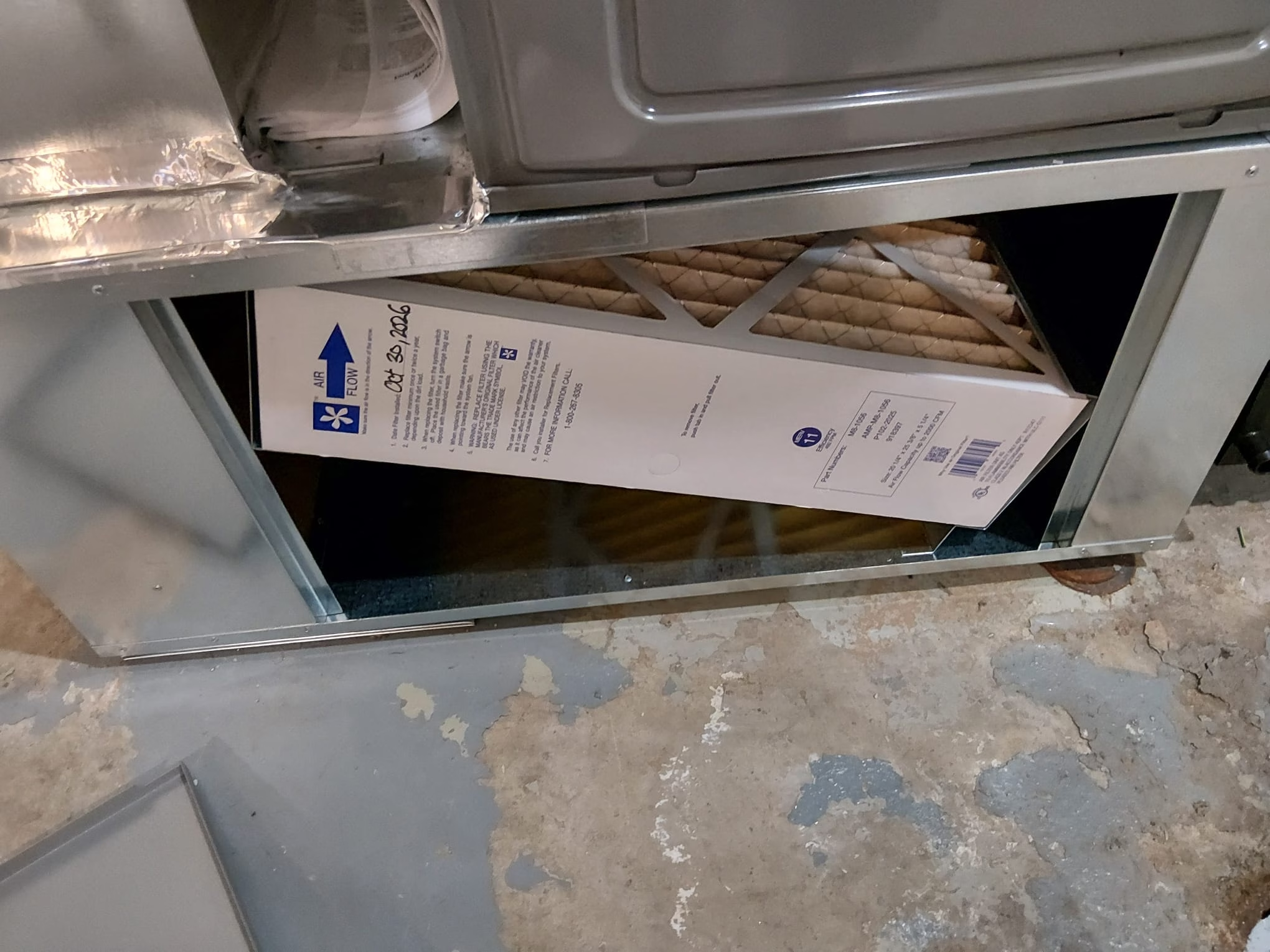
The raised base also keeps the filter accessible from the front for routine replacement.
If water has reached your furnace, do not restart it just because the outside looks dry. Ontario’s flood safety guidance advises against using flooded appliances until they have been checked by the appropriate authority. Arrange a professional assessment before putting the system back into service.
Before the furnace replacement
The original furnace sat close to the basement floor, with return ductwork beside it and a water heater nearby. After the flood, the replacement gave us an opportunity to reconsider that arrangement.
Raising a furnace adds clearance above shallow water on the floor. It does not make the equipment floodproof or stop water from entering a basement. Water can still reach the furnace if it rises high enough, and connected equipment or lower components may remain exposed.
For this home, we replaced the affected furnace and gave the new cabinet more separation from the floor.
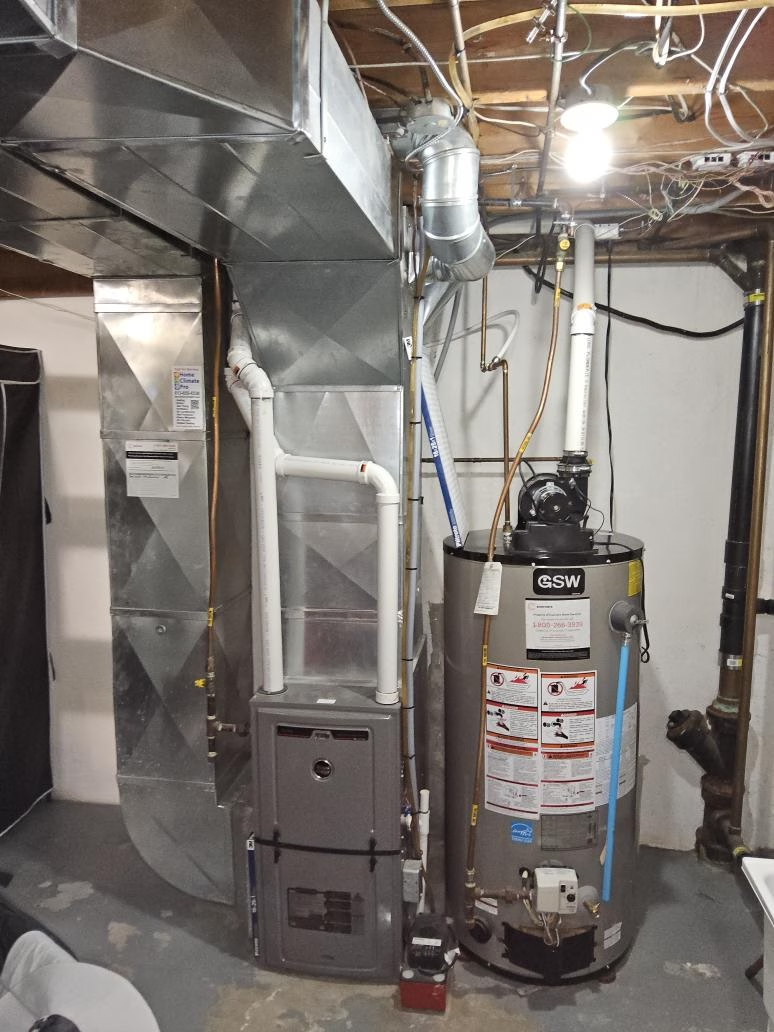
A raised furnace with the filter underneath
In the finished installation, the furnace sits above a sheet-metal platform. The return duct connects alongside it, and the platform houses the filter below the furnace. Return air from the home passes through that filter before entering the bottom of the cabinet.
A front access panel allows the homeowner to reach the filter when it needs changing. The photos below show the platform closed and with the panel removed.
The platform brings the raised support, return-air connection and filter into one arrangement beneath the furnace.
How the bottom return works
The platform gives return air a route into the blower through the bottom of the furnace. The filter, return ductwork and furnace settings still need to work together. A restriction farther upstream can limit airflow even with a roomy platform beneath the cabinet.
Airflow performance depends on the whole system. A technician uses pressure and airflow measurements to check how the furnace, filter and ductwork work together.
Planning the raised installation
Raising a furnace changes more than its distance from the floor. The support must be suitable for the equipment, and the new position must work with the return and supply ductwork, venting, condensate drainage and service access. The raised support needs to be designed for the furnace it carries.
In Ontario, this work belongs with a TSSA-registered fuels contractor and appropriately certified technicians. The installation must follow applicable requirements and the manufacturer’s instructions for the exact furnace and configuration. TSSA explains contractor registration and technician certification.
If you are comparing replacement quotes, ask how the new position affects the surrounding connections. We can help you understand the proposed work, including access for filter changes and future servicing.
Why we chose the Rheem R962V
The Rheem R962V combines two-stage heating with a variable-speed blower. It can use a lower heating stage when less heat is needed and a higher stage when demand increases. Rheem’s R962V product information describes these features.
It is a model our team knows well. In our service experience, its combination of comfort features and repairability makes it a strong option, and we have found common service parts straightforward to source. Those are practical considerations when choosing equipment that may need attention during an Ottawa winter.
Choosing the furnace and planning the installation go together. Here, the raised filter platform was an important part of that plan.
Planning a furnace replacement after a flood
Once immediate safety concerns have been addressed, a replacement is an opportunity to review the equipment layout. Ask about cabinet height, return-air arrangements, filter access and components that remain near floor level. A raised platform may be suitable for the home, as one part of a wider discussion about water exposure and the installation.
For this Nepean home, the replacement brought a new furnace, a different return-air arrangement and more separation from the basement floor. Thank you to the homeowner for choosing our local team.
If you are dealing with flood-affected equipment, our team is here to help you work through the next steps. Contact AirZone to discuss the affected equipment and replacement options.
You can also read about our flooded-basement HVAC service and furnace installation process.