
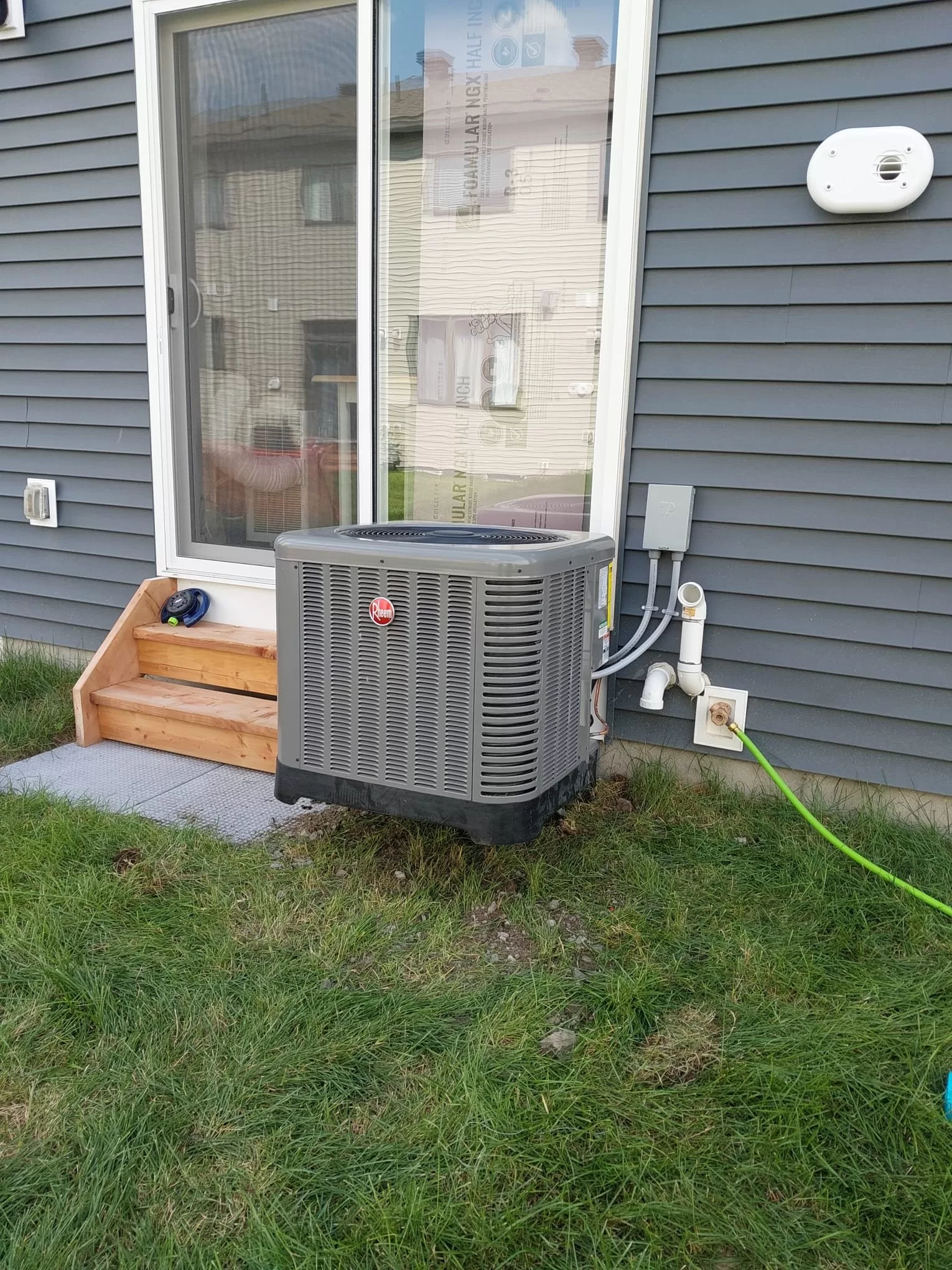
Should you cover an air conditioner for winter? In most Ottawa homes, a full wrap does more harm than good. Outdoor equipment is built for weather, while tightly covering it can trap moisture and shelter pests. The correct answer also depends on whether the outdoor unit is a cooling-only air conditioner or a heat pump that must operate all winter.
First, Confirm Whether You Have an AC or Heat Pump
Central air conditioners and heat pumps can look almost identical outside. The difference is what happens when the thermostat is switched to heat. A cooling-only AC remains off while the furnace heats the home. A heat pump reverses its refrigeration cycle and uses the outdoor unit for both heating and cooling.
If you are unsure, check the model information or ask the company that installed the system. Do not assume that every outdoor unit can be shut down or covered. AirZone can also help homeowners identify their equipment during annual HVAC maintenance.
| Outdoor Equipment | Winter Operation | Cover Recommendation |
|---|---|---|
| Central air conditioner | Normally remains off during heating season. | Usually leave uncovered. Consider only a breathable, properly fitted top shield when overhead debris or ice is a concern. |
| Central heat pump | Runs during winter to provide heat. | Never wrap the cabinet or block the fan and coil. Use only a compatible open-sided top shield if protection is needed. |
| Ductless heat pump | Runs during winter unless it is a cooling-only model. | Keep the discharge, coil and service clearances open. Do not use a full cover. |
Why a Full Plastic AC Cover Can Cause Problems
A tarp or tightly fitted vinyl wrap may look protective, but it can prevent the cabinet from drying naturally. Moisture trapped against metal components can encourage corrosion, while a sheltered enclosure may attract mice and other small animals looking for a winter nesting location.
A loose cover can also flap in the wind and rub against the cabinet finish. More importantly, a forgotten cover creates a serious airflow problem if someone switches the system on during an unexpected warm day. This is especially dangerous when the unit is actually a heat pump.
When a Top-Only Cover Can Make Sense
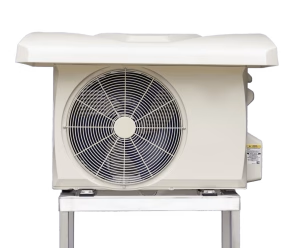
Some installations face specific overhead hazards: heavy leaves, freezing roof runoff, falling icicles or snow sliding from a roof edge. In these locations, an open-sided top shield can redirect debris and precipitation while preserving airflow around the cabinet.
Open-Sided Protection for Compatible Units
AirZone offers the Innopro S4422 heat pump cover, a lid-style accessory that protects from above while leaving the sides open. Compatibility, dimensions, mounting and service access should be confirmed before installation.
A cover is not a substitute for correcting a downspout that empties beside the unit, unsafe icicle formation or poor equipment placement. Address the source of the water or falling ice wherever practical.
How to Prepare the Outdoor Unit for Fall
- Remove loose debris. Pick out leaves and twigs around the cabinet without bending the coil fins or opening service panels.
- Trim vegetation. Maintain the clearances required by the manufacturer and keep shrubs from growing into the coil.
- Inspect the location. Look for unstable supports, damage, roof runoff and anything that may drop snow or ice onto the unit.
- Leave electrical decisions to the equipment instructions. Never disconnect power to a heat pump needed for winter heating. Ask before switching off power to any unfamiliar system.
- Record existing concerns. Photograph damaged panels, unusual corrosion or bent components so changes are easier to monitor.
Do not pressure-wash the coil, apply household chemicals or attempt electrical and refrigerant work. If the AC finished summer with weak cooling, repeated breaker trips, leaking or unusual noise, book diagnosis rather than hiding the problem until spring. Routine air conditioning service is best scheduled before regular cooling demand returns.

Heat Pumps Need Winter Access, Not Winter Wrapping
Cold-climate heat pumps are expected to operate through Ottawa winters. Leave room for airflow, drainage, defrost operation and technician access. Light frost can be normal, but persistent heavy ice, a blocked fan, repeated fault codes or new mechanical noises require attention.
AirZone provides heat pump maintenance for operating equipment and heat pump repair when there is an active problem. If you are comparing a replacement for an older AC, our Ottawa heat pump guide explains current central, ductless and hybrid options.
Protect the Right Equipment the Right Way
AirZone HVAC Services has installed and serviced air conditioners and cold-climate heat pumps across Ottawa since 2005. Send us the model number and a photo of the outdoor unit if you need help identifying the equipment or selecting appropriate protection.
Ask AirZone About Your SystemWinter AC Cover FAQs
Does an Ottawa air conditioner need a winter cover?
Usually not. Modern outdoor units are designed for weather. A compatible top shield may help where falling leaves, ice or roof runoff create a specific risk.
Can I wrap my air conditioner with a tarp?
No. A full tarp can trap moisture, attract pests and create a problem if the unit is accidentally operated while covered.
Can a heat pump be covered during winter?
Never wrap or block a working heat pump. Only use a properly fitted, open-sided top shield that is compatible with the equipment.
Should I turn off the outdoor disconnect for winter?
Do not disconnect a heat pump required for heating. For cooling-only equipment, follow the manufacturer’s instructions or ask your HVAC technician because controls and electrical requirements vary.