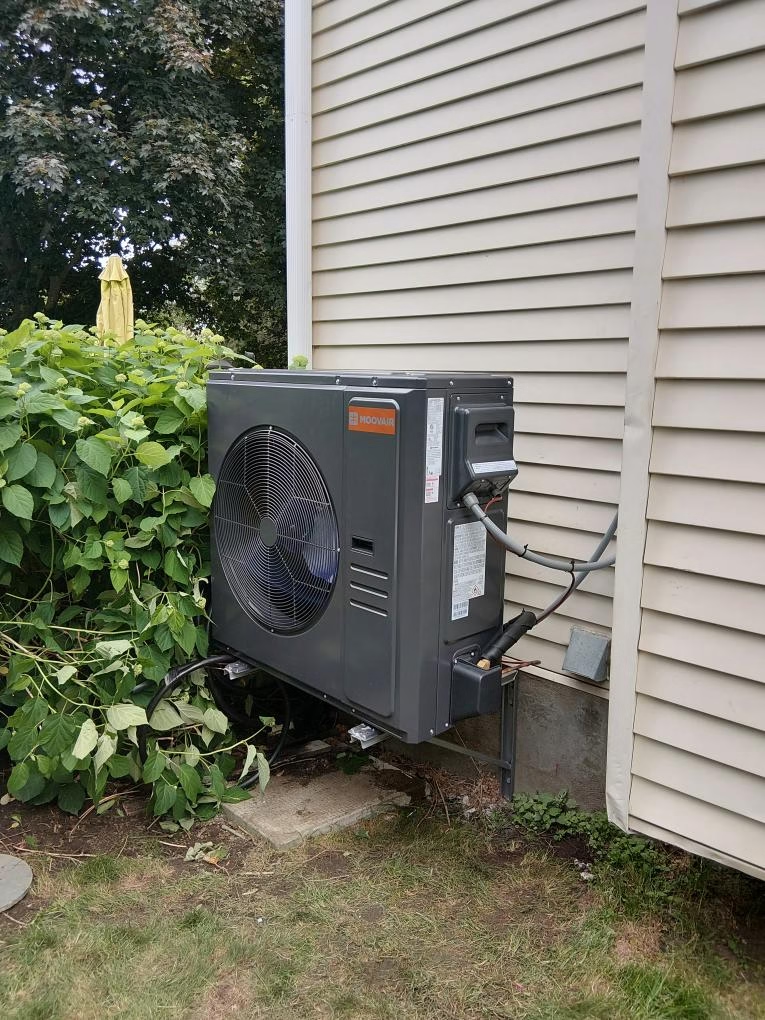
Canada has announced a new National Heat Pump Rebate that could make a heat-pump replacement more affordable for eligible Ottawa households. The headline amounts are up to $10,000 for eligible households at or below the published income threshold and $2,000 for other eligible households. If you are planning a heating upgrade, our Ottawa team can help you understand how the rebate may fit your project and budget.
Program update: eligible installations from November 1, 2026
The November 20 federal application and receipt rules explain who files and when receipts are due. The portal is expected in early 2027. If you install before launch, keep the paperwork now and apply when the portal opens.
What was announced on October 8?
The Prime Minister’s announcement introduces the National Heat Pump Rebate as part of a broader federal home-retrofit initiative. It includes two rebate levels:
- Up to$10,000for eligible households whose after-tax income is at or below the published threshold for their province or territory and household size.
- Announced rebate$2,000for other eligible households.
The announcement also permits combining these rebates with existing provincial programs. No pre-installation or post-installation energy audit is required under the announced federal process.
Your written quote should show the full equipment and installation price, with any estimated rebate listed separately.
Which heat pumps and households are covered?
Replacing an existing heat pump or air conditioner may qualify if the new listed system can heat the whole home. Ask us to identify the matched system’s AHRI number on your quote. A like-for-like cooling-only replacement does not qualify.
The current limit is one rebate per household, even if the household owns several properties. Applicants must live in Canada and own the home; an owned rental property can qualify. The update also provides an exception for residents of Indigenous-community homes owned by the local Indigenous government. An address that already received heat-pump funding through the Canada Greener Homes Grant or the Oil to Heat Pump Affordability Program is excluded.
For retroactive eligibility, confirm the exact system’s AHRI listing on the eligible product list, purchase and installation by an HVAC contractor, and sizing to heat the whole home. Eligibility depends on the exact system, so check its listing even if the brand qualified under an earlier program. November 1 federal program update sets out the current requirements.
November 13, 2026 equipment update: Canada now details which ground-source categories can be listed alongside cold-climate air-source models. For split systems, install the applicable components under the same AHRI or reference number, including the furnace where specified. Multi-split indoor units do not need individual listings under that certification, and the furnace is not part of a certified coils-only combination. Read the federal equipment guidance.
If a listed heat pump was purchased or installed before it was removed from the list, it can still meet the equipment requirement. Keep your dated purchase or installation record. All other program requirements still apply.
What if your Ottawa home uses natural gas?
The November 1 update expressly includes homes currently heated with natural gas. That does not guarantee that a particular installation qualifies or that switching will reduce heating bills; costs depend on the region, equipment and other factors.
The federal update says the existing heating system does not have to be removed. That does not by itself confirm every dual-fuel equipment combination or make a replacement furnace an eligible expense. Verify the exact AHRI-listed system and whole-home sizing; furnace-now/heat-pump-later arrangements still need clarification.
Installation timing and application steps
If you install from November 1, 2026 until the portal opens, file your own application and supporting documents together after launch. Only requirements published on November 1 apply to that installation period. Once the portal opens, the usual order for a planned installation is to apply, receive confirmation of funding eligibility, install and then submit your receipts. Your contractor supplies records; they cannot file your federal claim.
Ontario’s Home Renovation Savings Program has separate contract and application steps and still requires approval before installation. Confirm the requirements for each program before committing. Keep the full project cost and payment schedule in view when comparing options.
What still needs confirmation?
Federal applications are planned for early 2027 for eligible installations from November 1, 2026. Income thresholds and retroactivity requirements are now published. The exact portal opening date, treatment of earlier purchases or contracts, and split installations still need clarification. Project-specific combined federal-and-Ontario amounts must be confirmed.
Keep the dated invoice and proof of payment. Ask the installer to record your name and address, their business name, the installed models and AHRI number, quantity and total cost. If you apply before installation, receipts are due within six months of confirmation of funding eligibility. If you apply after installation, complete the application and submit the records within six months of the installation date.
How does this affect Ontario’s existing rebates?
The federal rebate can be combined with Ontario’s Home Renovation Savings rebate when the household and installation meet both programs’ criteria. HRS permits eligible outside funding, subject to its exclusions and supply-and-install cost cap. Confirm the combined amount for your specific project rather than assuming every household qualifies for the advertised maximum.
HRS has its own equipment, heating-fuel, contract and application requirements. It requires a participating contractor and approval before installation. Its participant agreement, section 3(d), also limits prior binding commitments outside the program’s requirements, so confirm the sequence before signing. The federal update does not create a universal November 30 deadline for the HRS space-heating heat-pump stream.
Our current Ottawa HVAC rebate guide is a useful starting point for the existing programs. If you already have an application or a scheduled installation, ask which program your paperwork covers and what any proposed change would mean before altering the plan.
What Ottawa homeowners can do now
Start with the home and the heating problem.
Write down your current heating fuel, equipment age and rooms that are difficult to keep comfortable. Gather recent utility bills and any existing quote or rebate approval. These details help us recommend options that suit your home and budget.
Compare a complete system.
Winter heating output, duct airflow, electrical requirements, controls and backup heat all deserve attention. Ask how the proposed system will serve your home during cold weather and what work is included in the price. The right system should suit your home as well as the rebate requirements.
Separate confirmed costs from expected assistance.
Ask for a quote that clearly identifies equipment and installation charges. Keep any estimated rebate separately identified until the administrator confirms it. Include electrical or duct changes where needed so you can compare the full project.
Keep urgent heating needs on track.
If your system is failing or your home has no heat, arrange a service assessment. Discuss safe repair and replacement options now. Do not leave a heating problem unresolved while waiting for the program to open in 2027.
Common questions about the new rebate
Can I apply for the new rebate now?
No. The federal portal is expected in early 2027. As the homeowner, you submit the claim; we can give you the matched equipment details and installation records to support it.
Does every household qualify for $10,000?
No. In Ontario, the published after-tax household income limits for the higher rebate are $46,981 for one person, $92,884 for two, $119,850 for three, $146,217 for four and $158,202 for five or more. Eligible households at or below the relevant limit may receive up to $10,000; above-median-income households may qualify for $2,000. Actual amounts depend on income, equipment cost and approval.
Can I combine this with an Ontario rebate?
Yes. The federal rebate and Ontario’s Home Renovation Savings rebate can be combined when the household and installation meet both programs’ criteria. HRS permits eligible outside funding subject to its exclusions and supply-and-install cost cap. Its contract and application steps and approval-before-installation requirement remain separate. Confirm the combined amount for your specific project.
Will an installation completed before launch qualify?
A qualifying system installed from November 1, 2026 until launch may be eligible. Apply when the portal opens and complete your application and supporting submission within six months of installation. Only the requirements published on November 1 apply to those installations. Work completed before November 1 is ineligible.
Should I postpone a repair while waiting?
Keep your home safely heated. Have a failing system assessed promptly and discuss repair or replacement options based on your immediate needs. A future rebate should not be the only basis for an urgent decision.
Plan your next step with AirZone
Thank you for considering AirZone for your Ottawa home. We can review your heating needs, explain heat-pump installation options and help you compare a written quote with the applicable rebate requirements.
Eligibility remains subject to the final program rules and the administrator’s approval.
Information checked . Program details, funding and availability can change. AirZone is an HVAC contractor, not the rebate administrator.