When your old air conditioner is failing during an Ottawa heat wave, the decision can feel urgent. You want the house cool again as quickly as possible, but you also do not want to miss out on a valuable rebate if a heat pump would be the smarter long-term upgrade.
That is the real choice many homeowners are facing in summer 2026:
Do you choose a fast air conditioning installation and restore cooling quickly, or do you wait for Home Renovation Savings Program approval and install a qualifying cold-climate heat pump instead?
There is no single right answer for every home. A homeowner with an older gas furnace and a broken air conditioner may make a different decision than a rural homeowner heating with propane, oil, electricity, or wood. A family with young children, health concerns, or a home that is already too hot may prioritize immediate comfort. Another homeowner may be willing to wait if the rebate makes a heat pump close to the same net cost as a high-value air conditioner.
At AirZone HVAC Services, we help Ottawa homeowners compare both options clearly: fast cooling now, or rebate-supported heat pump installation with added year-round benefits.
October 8, 2026 update: Canada has announced an upcoming National Heat Pump Rebate. It is not open for applications yet. Read what is confirmed so far. The prices, rebate examples and roughly two-week approval experience below refer to AirZone’s summer 2026 HRSP comparison. They do not describe the new federal program’s launch or approval timing. Eligibility for gas-and-heat-pump systems under the new federal program has not been confirmed.
First: The Home Renovation Savings Program Does Not Apply to Standard Air Conditioners
One of the biggest points of confusion is whether a standard central air conditioner qualifies for the current Home Renovation Savings Program.
In most typical scenarios, it does not.
The rebate opportunity is primarily tied to eligible heat pump systems and other energy-efficiency upgrades, not a conventional cooling-only central air conditioner. That means if you choose a standard AC replacement, the decision is usually based on price, product value, availability, warranty, installation timing, and comfort — not a government heat pump rebate.
That does not make a new air conditioner a bad choice. In fact, for many Ottawa homes, a modern high-value central air conditioner is the fastest and most practical way to restore summer comfort.
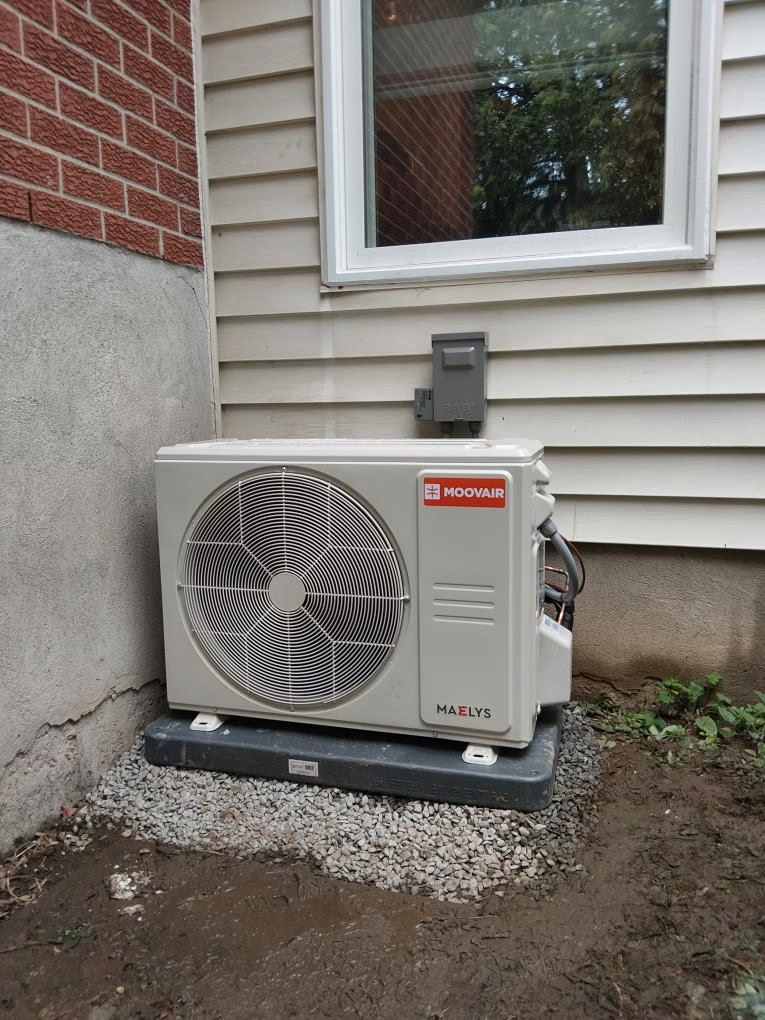
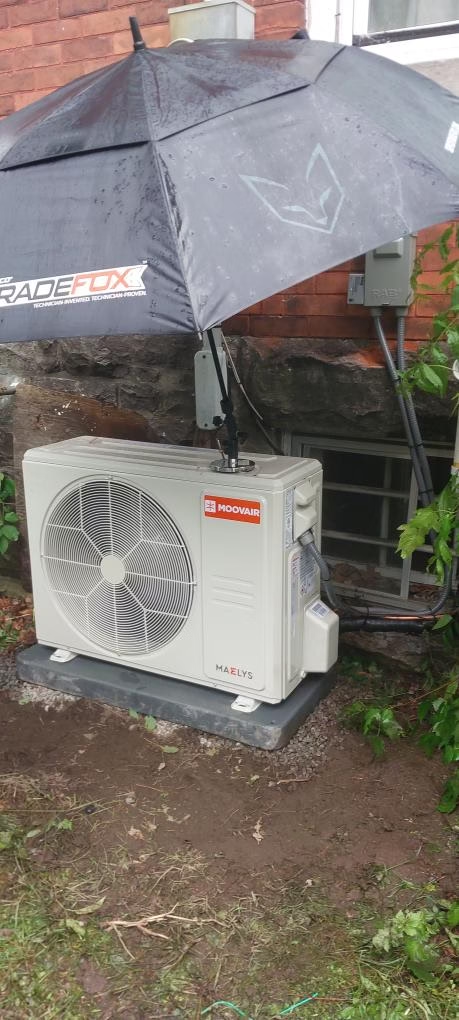
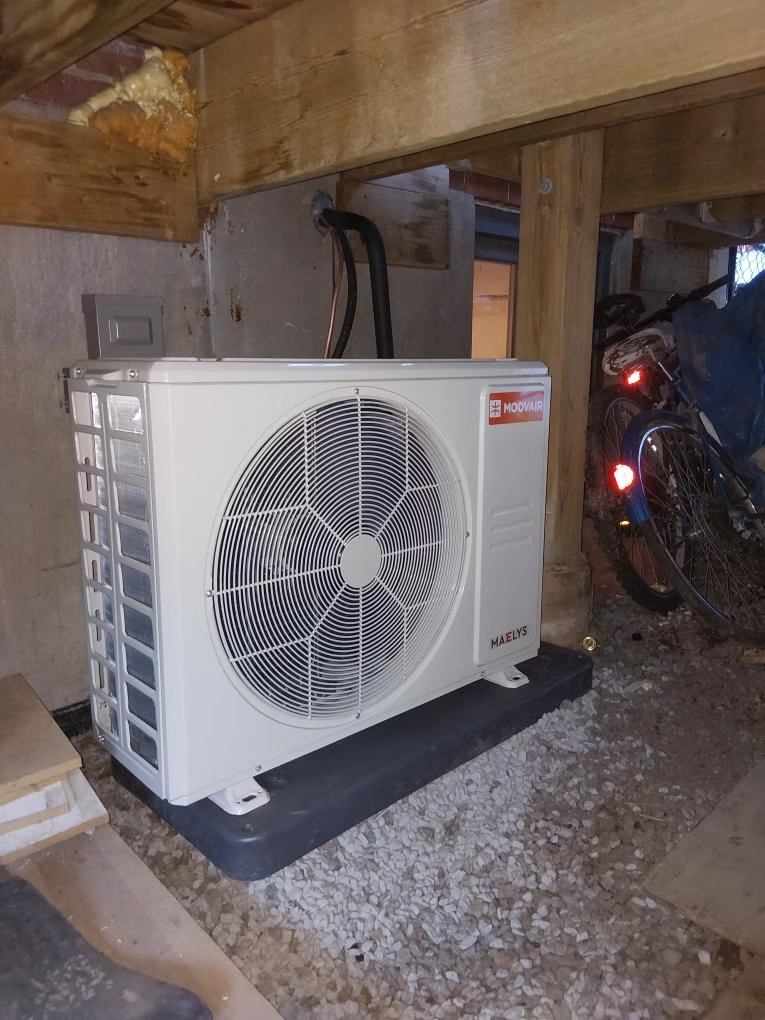
For example, the Moovair Maelys has become a strong option for homeowners who want a modern, efficient, quiet, side-discharge air conditioner without waiting on rebate approval. In summer 2026, an average installed Maelys scenario may be around the $4,500 range, depending on home requirements, equipment sizing, electrical needs, and installation complexity.
For a homeowner who needs cooling quickly, that can be a very attractive path. You can also compare available central air conditioner options if your priority is fast replacement rather than waiting for rebate approval.
The Heat Pump Rebate Option: Better Long-Term Value, But Usually Not Immediate
A cold-climate heat pump is different from a standard air conditioner.
A central air conditioner provides cooling only. A heat pump provides summer cooling and can also provide efficient electric heating during suitable parts of the heating season. In Ottawa, this can be especially valuable when the heat pump is paired with an existing gas furnace in a hybrid system.
That is where the rebate conversation becomes interesting.
A typical Ottawa homeowner with a gas furnace may qualify for a Home Renovation Savings Program heat pump rebate that meaningfully lowers the installed cost of a qualifying cold-climate heat pump. In a common example, a homeowner looking at an average heat pump installation around $7,000 may receive a rebate around $1,500, depending on system size, eligibility, program rules, and equipment selection.
That brings the net cost closer to the price of a high-value air conditioner like the Moovair Maelys.
This is why the decision is not simply “air conditioner vs heat pump.” The better question is:
Would you rather install cooling quickly, or wait for rebate approval and possibly get a cold-climate heat pump for a similar net investment?
The Tradeoff: Fast Cooling vs. Rebate Approval
The most important timing issue is approval.
For the Home Renovation Savings Program heat pump rebate pathway, the installation should not begin until the required pre-installation approval is complete. In AirZone’s current summer 2026 experience, homeowners should plan for an average wait of around two weeks for approval, although timelines can vary and may be longer depending on program volume, documentation, and processing.
That creates a real-world decision during hot weather.
If your existing AC has completely failed and the house is uncomfortable, waiting two weeks may not be realistic. In that case, paying more out of pocket for a fast air conditioning installation may be the better comfort decision.
But if your current cooling system is still limping along, or if your home is manageable with fans, portable units, basement cooling, or temporary adjustments, waiting for rebate approval may be worth it.
The rebate path can turn a more advanced system into a much more affordable upgrade. You can review AirZone’s current HVAC rebates page for the latest rebate direction before deciding which route makes sense.
Option 1: Choose a Fast Air Conditioner Installation
A fast AC installation may be the better choice when immediate cooling is the priority.
This is especially true if:
- Your current air conditioner has completely failed.
- Your home is already too hot.
- Someone in the home is sensitive to heat.
- You cannot comfortably wait for rebate approval.
- You want the lowest practical installed price.
- You are not currently focused on winter heating efficiency.
- Your existing gas furnace is still relatively new and reliable.
- You prefer a straightforward cooling-only replacement.
A standard central air conditioner is also easier to compare because there is no rebate approval step, no heat pump eligibility review, and no need to think through hybrid heating strategy. The project can usually move faster once the quote is approved and equipment is available.
For many Ottawa homeowners, that simplicity matters.
A modern air conditioner can still offer major improvements over an older builder-grade unit, especially if the existing AC is noisy, inefficient, poorly matched, leaking refrigerant, or near the end of its life. A product like the Moovair Maelys may be a strong fit for homeowners who want quiet operation, a compact side-discharge design, and excellent summer cooling value without waiting for a rebate.
If your main goal is to get the home cool again quickly, a standard AC replacement may be the most practical path.
Option 2: Wait for Approval and Install a Cold-Climate Heat Pump
Waiting for rebate approval may be the smarter choice when long-term value matters more than immediate speed.
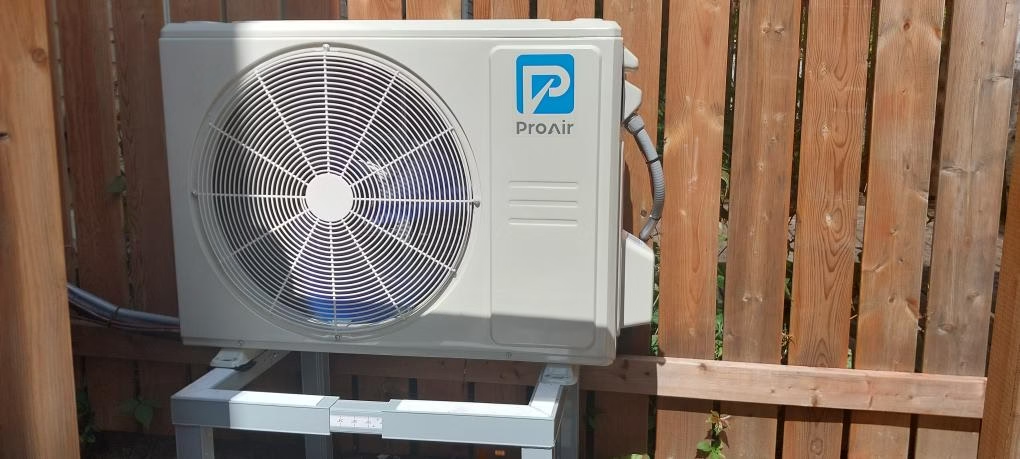
A cold-climate heat pump can provide the same summer cooling function as an air conditioner, but it also adds efficient heating capability. For Ottawa homeowners with a gas furnace, the heat pump can often handle comfort during milder winter days and shoulder seasons, while the furnace remains available for very cold weather or backup.
That gives the home two sources of heat instead of one.
This redundancy is a major benefit that homeowners often overlook. If the furnace has an issue during winter, the heat pump may still be able to provide heat depending on the outdoor temperature, system design, and the specific situation. It is not a substitute for proper furnace maintenance, but it does add flexibility and resilience.
A heat pump may also help reduce reliance on gas during milder heating periods, support more efficient shoulder-season heating, and prepare the home for future energy trends.
Waiting for the rebate may make sense if:
- Your existing AC still works enough to get through the approval period.
- You want both cooling and heating benefits.
- You are interested in a hybrid heat pump and furnace setup.
- You want better shoulder-season heating efficiency.
- You value redundancy in winter.
- Your current system is aging and you want a more strategic upgrade.
- The rebate brings the heat pump close to the net cost of a standard AC.
- You want AirZone to help you navigate the rebate process properly.
For homeowners who can tolerate the wait, a rebate-supported heat pump may be the more future-ready choice.
A Simple Example: Maelys AC vs. Rebate-Supported Heat Pump
Here is a simplified way to think about the decision.
Option A: Fast air conditioner installation
A modern Moovair Maelys air conditioner installation may average around $4,500 in summer 2026, depending on the home and installation requirements. The homeowner gets fast cooling, strong value, and a straightforward replacement path.
Option B: Heat pump installation with rebate
A qualifying cold-climate heat pump installation may average around $7,000 in a typical summer 2026 scenario. If the homeowner qualifies for an estimated $1,500 rebate, the net cost becomes much closer to the air conditioner option.
The heat pump may require waiting for approval before installation, but the homeowner gets summer cooling plus the added benefits of heat pump heating during suitable conditions.
So the question becomes:
Is fast cooling worth more to you right now, or is the added long-term value of a heat pump worth waiting for?
That is the conversation homeowners should be having before replacing an air conditioner in 2026.
Rural Ottawa Homes May Have an Even Bigger Rebate Opportunity
The rebate conversation becomes even more important for homeowners in rural Ottawa and surrounding communities who do not heat with natural gas.
Homes heated with propane, oil, electricity, or wood may qualify for larger rebate opportunities under the Home Renovation Savings Program than many typical urban natural gas homes. That can materially change the economics of a heat pump upgrade.
This matters for areas around Ottawa where fuel types vary more widely, including rural properties, larger lots, older homes, and homes outside standard natural gas service areas.
For these homeowners, the question is not just whether a heat pump is a better comfort product. It may also be one of the strongest rebate opportunities available in summer 2026.
If your home currently uses propane, oil, electricity, or wood as the primary heating source, it is especially important to review your eligibility before choosing a standard air conditioner. The rebate amount may be large enough that a cold-climate heat pump becomes the obvious choice, even if the upfront quote looks higher before incentives.
AirZone can help rural homeowners review the home, fuel type, equipment options, and rebate pathway before installation begins.
Why Some HVAC Companies Avoid Rebates
Rebate programs can be extremely valuable, but they are not always simple.
The contractor needs to understand eligible equipment, documentation, application timing, installation requirements, and program rules. The homeowner needs to avoid starting the installation too early. The paperwork has to be handled correctly. Equipment must meet the correct criteria.
That complexity is one reason some companies avoid rebate work.
In some cases, the company may not be qualified, registered, or comfortable working through the program requirements. In other cases, the contractor may simply prefer easier air conditioner replacements because they can be sold and installed faster without the extra administration.
That may be convenient for the contractor, but it is not always best for the homeowner.
AirZone takes a different approach. We specialize in helping homeowners compare air conditioners, heat pumps, hybrid systems, rebates, financing, and long-term maintenance options. If a rebate-supported heat pump is the smarter decision for the home, we want the homeowner to understand that before they make a rushed cooling-only purchase.
The goal is not to push every customer into a heat pump. The goal is to explain the tradeoff clearly.
When You Should Not Wait for the Rebate
There are situations where waiting is simply not worth it.
If the home is dangerously hot, if the current system is completely dead, or if the homeowner cannot tolerate the approval delay, a fast air conditioning installation may be the right decision.
It may also make sense to skip the rebate path if the home is not a strong candidate for a heat pump, the existing electrical setup needs more work than expected, the budget is tight even after incentives, or the homeowner simply wants the most straightforward cooling replacement.
A high-value air conditioner can still be the correct answer.
This is why AirZone compares both options instead of treating every situation the same.
When Waiting for the Rebate May Be the Smarter Move
Waiting may be worthwhile if your current system is still providing some cooling and you are not in an emergency situation.
It may also be the better move if you are planning to stay in the home, want to improve winter efficiency, like the idea of having both a gas furnace and heat pump, or qualify for a larger rebate because of your fuel source.
A cold-climate heat pump can be a more strategic upgrade than a standard air conditioner because it changes the home’s year-round comfort system. You are not only replacing cooling. You are adding another heating tool.
For many Ottawa homes, especially homes with older AC equipment and a still-functional furnace, a hybrid heat pump system can be a very smart middle ground.
Questions to Ask Before You Decide
Before choosing between fast AC installation and a rebate-supported heat pump, ask these questions:
- Is my current AC completely dead, or can I tolerate a short wait?
- Does my home use natural gas, propane, oil, electricity, or wood?
- Would I benefit from heat pump heating in spring, fall, and mild winter conditions?
- Would winter backup heat redundancy matter to me?
- How long do I plan to stay in the home?
- Is the rebate large enough to make the heat pump close in net cost to a standard air conditioner?
- Is the contractor experienced with rebate paperwork and qualifying equipment?
- Do I want the simplest cooling replacement, or the better long-term home comfort upgrade?
A good HVAC quote should help you answer these questions clearly.
AirZone Can Help You Compare Both Options
Replacing an air conditioner in Ottawa used to be simple: the old AC failed, and you bought another central air conditioner.
In 2026, the decision is more nuanced.
A standard air conditioner may still be the fastest and most cost-effective way to restore cooling. A product like the Moovair Maelys can be an excellent value for homeowners who want strong summer comfort without waiting for rebate approval.
But if you can tolerate the approval timeline, a qualifying cold-climate heat pump may offer a better long-term value, especially when the rebate brings the net price close to a standard AC installation.
For rural Ottawa homeowners using propane, oil, electricity, or wood, the rebate opportunity may be even stronger.
AirZone HVAC Services helps homeowners compare the full picture: air conditioner installation, heat pump installation, Home Renovation Savings Program eligibility, rebate timing, equipment options, financing, and long-term heat pump service support.
If you are deciding between a fast AC replacement and a rebate-supported heat pump, start with a proper quote and a realistic conversation about your home.
Book a consultation with AirZone to compare your options before you replace your cooling system.
Frequently Asked Questions
Does the Home Renovation Savings Program apply to air conditioners?
In most standard cooling-only replacement scenarios, the Home Renovation Savings Program does not apply to a conventional central air conditioner. The major HVAC opportunity is usually tied to eligible heat pump systems, not standard AC equipment.
Is a heat pump basically the same as an air conditioner?
A heat pump can cool your home like an air conditioner, but it can also provide heating. That makes it different from a standard central AC and one reason heat pumps are often eligible for rebates when air conditioners are not.
Do I have to wait for rebate approval before installing a heat pump?
Yes. For the Home Renovation Savings Program (HRSP) heat-pump pathway discussed here, homeowners must obtain pre-installation approval before the equipment is installed. Starting the installation before approval can make the project ineligible for HRSP. The upcoming federal program separately requires approval before purchasing or installing eligible equipment; applications are not open yet.
How long does rebate approval take?
HRSP timelines can vary. In AirZone’s summer 2026 HRSP experience, the average approval wait was around two weeks, although some applications took longer depending on program volume and documentation. This is not an approval estimate for the newly announced federal program, which is not open yet.
Is it worth waiting two weeks for a heat pump rebate?
For the summer 2026 HRSP comparison, it depends on your comfort needs and your home. If your current AC is completely dead and the house is too hot, fast AC installation may be more practical. If your home can tolerate the HRSP approval wait, an eligible rebate may make a cold-climate heat pump a much better long-term value. The roughly two-week experience does not apply to the upcoming federal program.
Why would a rural Ottawa homeowner get a bigger rebate?
Under HRSP, eligible homes heated with propane, oil, electricity, or wood may qualify for larger heat-pump rebate amounts than eligible natural-gas-heated homes. These are HRSP fuel-source rules; they do not establish eligibility or amounts for the upcoming federal program.
Should I choose a Moovair Maelys air conditioner or a heat pump?
Choose the Moovair Maelys or another high-value AC if you want fast, efficient summer cooling and do not want to wait for rebate approval. Consider a heat pump if you want cooling plus efficient heating benefits and the rebate brings the net cost close to a standard AC installation.
Can AirZone help with rebate paperwork?
Yes. AirZone helps homeowners review current rebate options, compare qualifying heat pump systems, and understand the steps needed before installation begins.