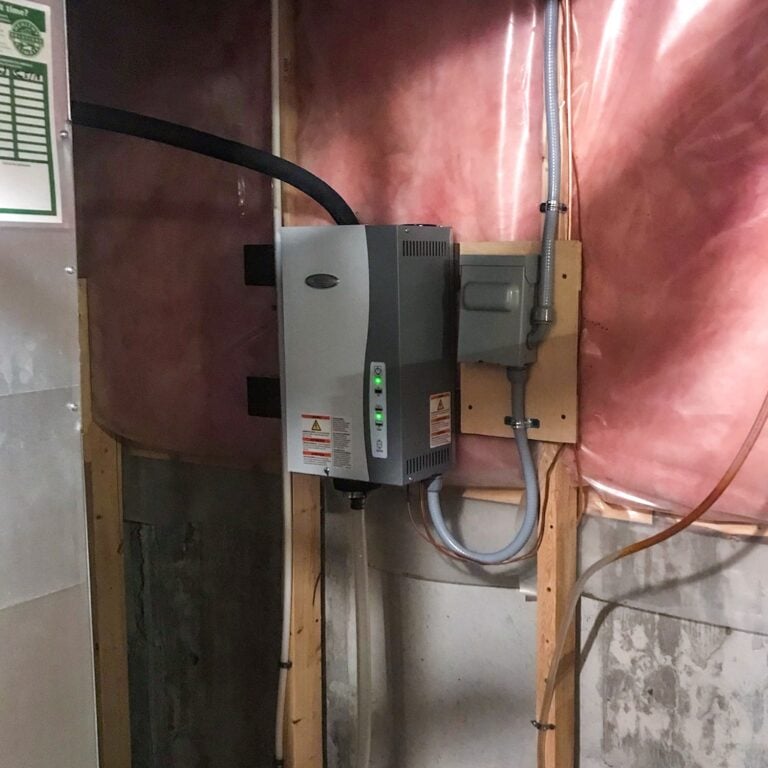
Waking up to a flooded basement is a homeowner’s worst nightmare, and in many Ottawa homes, the culprit is an aging furnace humidifier or a failed condensate pump that has been ignored for too long.
While it is tempting to skip annual professional HVAC maintenance to save a few dollars, or to simply change the humidifier pad yourself, a professional tune-up is the only way to catch failing valves and clogged drain lines before they dump gallons of water onto your floor.
If your whole-home humidifier is approaching 12 years old, it is no longer safe to repair—it is time to replace the entire unit to protect your home.
Why Humidifiers & Condensate Pumps Cause Basement Floods
It is one of the most heartbreaking phone calls we receive at AirZone HVAC Services.
An Ottawa homeowner calls us in a panic. They went down to their finished basement to grab something from storage, only to step onto a soaking wet carpet. Water has pooled around the furnace, ruining flooring, drywall, and personal belongings.
When our technician arrives to diagnose the issue, the cause is almost always one of two things: a stuck humidifier valve or a burst/clogged condensate pump.
In the aftermath, a frustrated homeowner will often tell us: “Nobody told me this could happen!” Or worse, they might try to blame the HVAC company for the equipment failure.
We believe in honest, candid conversations with our neighbours. The truth is, we do warn our customers about these risks every year. But when a homeowner declines Annual Maintenance year after year, or assumes that simply swapping the filter themselves is enough, they are unknowingly taking on a massive flood risk.
Here is the straightforward reality about how your humidifier works, why it expires at 12 years, and why professional maintenance is the cheapest flood insurance you can buy.
1. The 12-Year Humidifier Rule (Why You Must Replace the Whole Unit)
A furnace humidifier is not like a piece of ductwork; it is an active plumbing appliance operating in a harsh environment. It is constantly exposed to Ottawa’s hard, calcium-rich water and the extreme heat of your furnace.
Over time, this takes a severe toll on the equipment:
- Brittle Plastics: The plastic housing of the humidifier bakes in the heat and becomes brittle, eventually cracking and leaking.
- The Solenoid Valve Risk: This is the most critical failure point. The solenoid valve controls the flow of water into the humidifier. After a decade of hard water scale buildup, this valve can get stuck in the “OPEN” position. When this happens, water runs continuously into your furnace and straight onto your basement floor.
The AirZone Rule: If your whole-home humidifier is 12 years old, it has reached the end of its safe operational life. Even if it seems to be working, the internal components are severely degraded. We strongly advise replacing the full unit rather than attempting to fix an old one, simply because the risk of a catastrophic leak is too high.
2. The Condensate Pump: The Unsung Hero (Until It Fails)
If your furnace isn’t located right next to a floor drain, you likely have a Condensate Pump. This is a small plastic box sitting on the floor next to your furnace.
Its job is to collect the water that drains out of your humidifier and your high-efficiency furnace, and pump it up and out of your house (or over to a utility sink).
Why do they fail? As water sits in the pump, it mixes with dust and creates a thick, jelly-like substance known in the industry as “bio-slime.”
- If the pump isn’t cleaned annually, this slime clogs the discharge tube.
- The pump motor burns out trying to push water through the clog.
- The box overflows, and the water goes directly onto your floor.
Why replace it proactively? A condensate pump is a relatively inexpensive part. If yours is old, noisy, or constantly getting gunked up, replace it. Do not wait for it to fail. Spending a little money on a new pump today saves thousands in basement restoration costs tomorrow.
3. “Can’t I Just Change the Humidifier Pad Myself?”
We love proactive homeowners! Changing your humidifier pad (or “water panel”) yourself halfway through the winter is a great habit.
However, changing the pad is only 10% of humidifier maintenance. It does not replace a professional tune-up.
When you decline professional maintenance and opt to “do it yourself,” here is what is being missed:
- Flushing the Drain Lines: We clear out the bio-slime and calcium chunks that cause backups.
- Testing the Solenoid: We use a multimeter to ensure the water valve is opening and closing with precision, preventing the dreaded “stuck open” flood.
- Cleaning the Pump: We disassemble and clean the condensate pump reservoir to ensure the float switch isn’t jammed.
- Calibrating the Humidistat: We ensure the system is actually communicating with your furnace correctly.
The Cost of Declining Maintenance
We get it—nobody wants to spend money on preventative maintenance. When our dispatchers call to remind you about booking your annual tune-up, or suggest joining our Family Protection Packages, it is easy to say, “No thanks, everything is running fine.”
But HVAC equipment is out of sight and out of mind. A humidifier will quietly leak behind a furnace for days before the water reaches a part of the basement where you can see it.
By turning down maintenance, you are shifting the risk of that equipment failure entirely onto your own shoulders.
Protect Your Home This Season
Your HVAC system is the heartbeat of your home. It keeps you warm, it keeps your air comfortable, but it requires professional respect to do so safely.
If your humidifier is over 12 years old, or if you can’t remember the last time a professional looked at your condensate pump, do not wait for a puddle to appear.
Would you to book a preventative maintenance visit or get a quote on a new, safe humidifier? Book Your Service Online or call the AirZone team today.