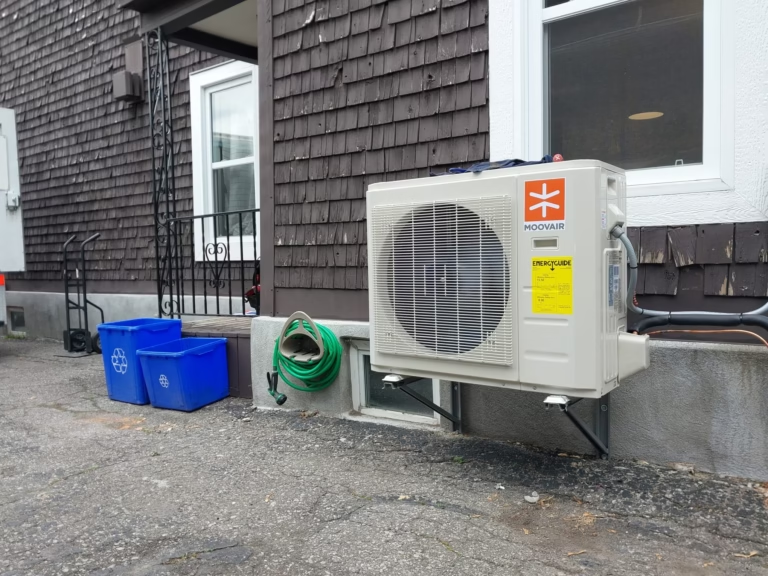
Heat pumps are celebrated for their whisper-quiet operation, but there is a catch that Ottawa homeowners need to know before installing one. While they are incredibly silent during summer cooling—exactly when you are outside enjoying your backyard—they can be significantly louder when working hard in winter heating mode. To combat this, local HVAC experts often steer customers toward side-discharge units mounted on stands or walls, which minimize noise year-round compared to traditional, bulky top-discharge models.
If you have been researching heating and cooling upgrades, you have probably read glowing reviews about how exceptionally quiet modern heat pumps are. Salespeople love to talk about decibel ratings and “whisper-quiet” technology.
But if you talk to a neighbor who had one installed last year, they might mention that their unit was surprisingly loud during a January deep freeze.
So, what is the truth? Are heat pumps actually quiet to run?
The answer is yes—but there is a very important catch. At AirZone HVAC Services, we believe in giving you the full picture before you invest in a new system. Here is the honest breakdown of how heat pump noise changes with the seasons, and how choosing the right equipment design makes all the difference for your Ottawa home.
The Summer Win: Total Patio Silence (Cooling Mode)
Let’s start with the best news. When a heat pump is running in cooling mode during the summer, it is a massive, life-changing improvement over a traditional air conditioner.
Older, standard AC units turn on with a loud “clunk” and blast at 100% capacity. If your AC is located near your back deck or a bedroom window, it can easily drown out a conversation or wake you up at night.
Because modern Heat Pumps use variable-speed inverter technology, they ramp up slowly and run continuously at very low speeds.
- The Benefit: When you are sitting on your patio in July having a barbecue with friends, the unit is often so quiet you have to physically walk over to it to see if the fan is spinning.
- The Reality: Summer is when you are actually outside, spending time close to the unit. This is exactly when you need the quietest operation possible, and a heat pump delivers flawlessly.
The Winter Catch: Working Harder (Heating Mode)
Here is the part some contractors forget to mention. When winter arrives and your heat pump becomes the primary heating method for your home, the noise level changes.
When it is -15°C outside, the compressor and fan have to work significantly harder to extract ambient heat from the freezing air.
- The “Rev Up”: To meet the heating demand of your home, the variable-speed compressor ramps up to higher speeds. A unit that hummed quietly at 55 decibels in the summer might push closer to 70 decibels in the dead of winter.
- The Defrost Cycle: In snowy, humid conditions near the freezing mark, ice builds up on the outdoor coils. The system will periodically enter a “defrost cycle,” making a distinct whooshing or hissing sound as the reversing valve shifts.
The Silver Lining: While the unit is undeniably louder in heating mode, it happens during the winter. You are inside, your windows are firmly shut, and you are not trying to host a patio dinner. For most homeowners, the winter noise is entirely unnoticeable from inside the house.
The Design Solution: Side-Discharge vs. Top-Discharge
If noise is a major concern—especially if you live in a high-density Ottawa neighborhood like Barrhaven or Orleans where the houses are built close together—the shape of the unit matters just as much as the technology.
Most traditional air conditioners and older heat pumps are “Top-Discharge.” These are the big, square metal boxes with a massive fan on top that blows air straight up. They have a large footprint and tend to vibrate more, creating a louder, echoing hum.
At AirZone, we actively steer our customers toward Side-Discharge units (often referred to as slim-line or suitcase-style units).
- Why They Are Quieter: Brands like Moovair, Midea, and Mitsubishi design these units with a much smaller footprint. The fan blows air horizontally out the front, which disperses the sound much more effectively.
- Mounting Matters: Instead of dropping a massive square box onto a plastic pad on the ground, side-discharge units can be installed on heavy-duty snow stands or mounted directly to your foundation wall with vibration-dampening brackets. This keeps them safely out of Ottawa’s deep snowbanks, prevents ice buildup from ruining the fan blades, and drastically cuts down on vibrational noise traveling through the ground.
Get the Right System for Your Space
A heat pump is an incredible piece of technology that will lower your carbon footprint and your utility bills. By understanding how the system operates across different seasons, you can make the smartest choice for your property layout.
If your outdoor unit needs to be placed near a property line, a window, or a deck, we can design a side-discharge solution that gives you high-efficiency heating in the winter and total, uninterrupted silence during your summer barbecues.
Want to see how quiet a modern side-discharge heat pump can be? Request a Free Equipment Consultation Today